Sunday, December 11, 2016
"Joy to the World", the Euroradio Christmas broadcast, on Radio 2 Dec. 18 2016
The misguided boffins of CBC Radio have managed to decimate many of the beloved programs on CBC Radio 2 over the last nine years. One of the programs that has managed to escape their malicious meddling is "Joy to the World", the Euroradio broadcast of Christmas music that is broadcast from European countries in the weeks before Christmas.
Hmmm ... come to think of it, the only reason that it's managed to survive so long is (a) because it originates from Europe, out of the clutches of CBC management and (b) it means the CBC doesn't have to originate any programming of it's own that day.
OK, enough griping. Sunday, December 18 2016 from 9:00 AM to 6:00 PM on your local CBC Radio 2 station. Enjoy it while you can. It will probably be cut some day.

Saturday, October 22, 2016
The Producers of "Q" Just Don't Get It
The CBC is re-launching "Q" on Monday October 24 with the new host, Tom Power. In fact, it would be more correct to say that this is the re-re-launch of "Q" (or is it "q"?) since the program was re-launched in 2015 with the now-departed host, Shad.
In this article from the October 22 Globe and Mail, it is said that the audience for "Q" has declined by 28% since October 2014 when Jian Ghomeshi was still the host of Q. (Interesting note: Jian Ghomeshi was fired from the CBC on October 26, 2014. So the re-re-launch of "Q" nearly two years to the day of Ghomeshi's firing is eerily appropriate. Or not.) Even worse, only 120 U.S. radio stations feature the program, down from a high of 180 stations when Ghomeshi was host.
Why did the audience fall so far, so fast? Quite simply, the CBC just doesn't understand the audience for Q.
When Ghomeshi was host the program consisted of a mix of programming, ranging from books to theatre to music to political commentary to sports. There was always something interesting to hear.
In contrast, since Ghomeshi's departure, the program has focused ad nauseam on "new music". Tune in on any day of the week and chances are that you will hear some obscure group from Tickle Cove, Newfoundland expositing on their new album, followed by a live performance of their latest song. (Nothing against Tickle Cove, mind you. Just an example.)
The thing is, we're just not interested. Just. Not. Interested. The audience decline might seem to confirm this.
So what are the plans for the new-new "Q"? More new music! Yeah, right, it didn't work for the last two years, so let's just double-down and make an even heavier bet on "new music". To quote the new executive producer:
“You know how sometimes you have talk programs that are blocks of interviews – and some of them are terrific, but that’s not what we’re going for here. We want layered use of sound throughout the show, so that sonically it really does jump out.”
Oh, great. Watch for the re-re-re-launch of "Q" in two years time.
Since newspaper articles have a habit of disappearing from the internet, here is the entire article:
CBC starting with ‘clean slate’ as Q relaunches under Tom Power
It would be tempting, as CBC Radio’s flagship arts and entertainment show Q takes yet another shot at relaunching next Monday with new host Tom Power, to focus on what is missing from the mix rather than on what is present: No Jian Ghomeshi, the ignominious original host who hasn’t been seen in public since his second trial for sexual assault was called off last May after he signed a peace bond; no Shad, the collegial rapper-turned-broadcaster who debuted to high hopes in April, 2015, but then limped along for 16 months before getting the vaudeville hook last August; no full-throttle two-hour live relaunch at the Glenn Gould Theatre in front of hundreds of invited guests, featuring appearances by Tanya Tagaq, Chilly Gonzalez, Marc Maron and a white-man rap by Peter “P. Manny” Mansbridge.
Also gone? The theme song penned by the musician Bahamas which was unveiled at that April, 2015, relaunch; a raft of regular contributors; and just about all of the show’s standing features, including both the pop culture and sports panels.
Many of the behind-the-scenes crew have left, too: About two-thirds of the show’s current staff of 18 were hired only within the past two months, after CBC summarily announced Shad was out in favour of Power. Still, focusing on what is gone may mean overlooking the intriguing process of reinvention that is underway.
“We started with a clean slate,” explains Jennifer Moroz, the show’s new executive producer, who comes to Q after well-respected stints at both The Hour with George Stroumboulopoulos and CBC Radio’s The Current. Sitting in her second-floor office at CBC’s Canadian Broadcasting Centre on Front Street earlier this week, she adds: “It’s not a new show, but it is a new show.”
“We have a new host who’s very different from the other two hosts in the last 10 years. We have an opportunity to build something – not only to [Power’s] strengths, but we really have a chance to play with the format a bit. Which, after 10 years, frankly – regardless of what was going to happen – is time to do it.”
Power, 29, is a St. John’s born-and-bred folk musician (he still plays with his Newfoundland-based band, The Dardanelles, though he has lived in Toronto since 2012) who has been a charismatic presence on CBC’s airwaves for the past eight years, first as host of Deep Roots and, since 2011, as host of Radio 2 Morning.
He was on the short list of prospective hosts when Shad got the nod, but may have been lucky that he wasn’t tapped for Q’s first post-Ghomeshi iteration, given the pressure at the time for the show to prove it could regain its footing so quickly after the crisis. Now, with the audience bottoming out, there is nowhere to go but up: The show’s average-minute audience last June was 168,000, down 28 per cent from two years earlier; only about 120 U.S. stations carry Q, down from a high of about 180.
Within the CBC bureaucracy, responsibility for the new-new Q has been moved from the Talk department to Music, reflecting a desire for a tighter focus on arts and entertainment rather than the broader notion of “culture,” Moroz says. The overall sound of the show will be “more musical,” with greater effort put into creating a distinctive sound that will stand out on the radio dial.
While she doesn’t want to single out any particular influences on the new sound, Moroz acknowledges that slickly produced podcasts such as NPR’sInvisibilia and RadioLab, as well as CBC’s Out in the Open, hosted by Piya Chattopadhyay, are kindred spirits.
And while the long-form interviews that were mainstays of Q since the beginning aren’t going away, there will be fewer.
“You know how sometimes you have talk programs that are blocks of interviews – and some of them are terrific, but that’s not what we’re going for here. We want layered use of sound throughout the show, so that sonically it really does jump out.”
Still, she hopes Q will be able to react to breaking arts stories as they unfold. “In a live daily show, everything can’t be really highly produced. But, to the extent possible, I’d like to sort of marry those two worlds, and bring in the layer of sound and production that you hear on those weekly podcasts that have high, high production values.”
The goal is to produce a show that is both accessible to casual listeners and still meaningful to hard-core fans of the artists who appear. Moroz says that, when the new staff conducted a “blue sky” brainstorming session last month, “one of the terms we came up with is, we want to be like an inclusive record store clerk.”
While she’s speaking, Power pops into Moroz’s office for a few minutes, on his way up to the studio to record an interview with members of the Sam Roberts Band, which will air in the first couple of weeks. He admits he’s not an expert in all of the subjects Q will cover, but then, he’s only the face of a large team behind the scenes.
“I felt some insecurity about my knowledge on certain things, walking into the show,” he says. “But I’ve surrounded myself with real experts here. The level of expertise on this show, in various forms, in various genres, is really remarkable. Creativity as well.” His job, he says, is to “ask questions that people will want to have answered: ‘Why does this matter to me? And what’s the humanity behind it? Why should I feel something and why should I listen to it? And why should I read it?’ ”
Moroz and Power head up to the studio, a secondary space that is normally used by CBC Music’s First Play Live recording series, with better acoustics than Studio Q. From now on, this is where they’ll do many of the interviews with musicians who come in to perform.
Power is in his element here, a quick-witted charmer who has an easy rapport with the guests. As the band plays, he stands off to the side of the studio, nodding his head in time to the music while glancing at the pages of prepared notes he holds in front of his chest, looking like a cross between an earnest undergrad debater and a boy-genius record producer. Every so often, a producer in the control room speaks into Power’s headset, and the host nods almost imperceptibly.
In between tunes, Power probes the band’s leader Sam Roberts on the development of the new album, and the need for an artist to keep evolving; it sounds as if Power could be thinking about Q itself.
After three songs, it’s time to wrap up the segment. “Sam, I had such a great time talking to you,” Power says.
Roberts replies: “Same here. Good luck with this – the next chapter for you.”
“Yeah, Shelagh Rogers does The Next Chapter,” Power quips, and the control room dissolves in laughter.
Wednesday, July 27, 2016
New music! New Music! New Music! New Music!
New Music! New Music! New Music! New Music! New Music! New Music!
After following the downhill trajectory of CBC Radio for the past seven years I've finally figured out where CBC Radio went wrong.
If you listen to the announcers and read the pronouncements of CBC Radio executives you will come to realize something. Everyone currently working at the CBC is a failed musician, record producer, music industry has-been executive, music industry wanna-be or music industry groupie. Sorry to tell it like it is folks, but it is true.
So what does this mean for CBC Radio? When the Jian Ghomeshi fiasco first erupted a newspaper article quoted a CBC Radio employee. The employee described how enjoyable it was (at first) to be working on the new programming at CBC Radio. The employee was quoted as saying that they would rather be programming shows with the so-called "new music" instead of programming classical music for seniors living in Saskatchewan. Yes, that's precisely what this person said. "Instead of programming classical music for seniors living in Saskatchewan." I would quote the newspaper article, but unfortunately Google is not co-operating with me in my search for the original article.
There you have it, folks. At one time if you were a failed musician or music industry groupie and were otherwise unemployable, you could find yourself a job at Sam The Record Man or an HMV outlet. With those venues no longer being an option, what is the failed musician with no other marketable skills to do? Why, join the CBC, of course!
Once there, the failed musician - let's call him or her FM for short - decides that the old CBC is, well, boring. The CBC is programming Classical Music for seniors living in Saskatchewan! They know nothing about the indie bands erupting all over the country! They know nothing about the New Music! New Music! New Music! New Music!
So what does the FM, now an aspiring programmer/producer/CBC executive/music industry has-been, do? Change the CBC, of course! Program more new music! Show Canadians what they're missing! Who cares if Canadians don't want it! They will learn to love it! The new programming on CBC Radio Two will "find it's audience", as CBC executives said many times.
In 2007 the CBC justified their programming changes with the elusive "Arts and Culture" survey, which purportedly found that Canadian seniors living in Saskatchewan didn't want their old CBC, but wanted a new, vibrant, culturally-aware CBC that programmed more new music. New Music! New Music! New Music!
Of course the CBC refused to release the infamous "Arts and Culture" survey to the great, unwashed public. But the survey found what the CBC Execs said it found. Trust us on this, they said. We know what's best.
And so we all know what happened. Programs were axed, veteran announcers were let go, new programming was introduced and the CBC's market share slid. If you don't know about all this, start reading my blog entries beginning in 2007. You can read the whole sorry story there.
Which brings us to my latest rant. There's a new show on CBC Radio One on weekdays from 1:00 - 3:00 PM. Whereas previously this time slot was occupied by a variety of interesting programming, such as "Ideas", "Rewind" and even "Vinyl Cafe", it is now occupied by a program that can only be described as "Q Lite". And yes, it is chock-a-block full of New Music! New Music! New Music! And yes, I find it impossible to listen to.
New music! New Music! New Music! New Music!
New Music! New Music! New Music! New Music! New Music! New Music!
After following the downhill trajectory of CBC Radio for the past seven years I've finally figured out where CBC Radio went wrong.
If you listen to the announcers and read the pronouncements of CBC Radio executives you will come to realize something. Everyone currently working at the CBC is a failed musician, record producer, music industry has-been executive, music industry wanna-be or music industry groupie. Sorry to tell it like it is folks, but it is true.
So what does this mean for CBC Radio? When the Jian Ghomeshi fiasco first erupted a newspaper article quoted a CBC Radio employee. The employee described how enjoyable it was (at first) to be working on the new programming at CBC Radio. The employee was quoted as saying that they would rather be programming shows with the so-called "new music" instead of programming classical music for seniors living in Saskatchewan. Yes, that's precisely what this person said. "Instead of programming classical music for seniors living in Saskatchewan." I would quote the newspaper article, but unfortunately Google is not co-operating with me in my search for the original article.
There you have it, folks. At one time if you were a failed musician or music industry groupie and were otherwise unemployable, you could find yourself a job at Sam The Record Man or an HMV outlet. With those venues no longer being an option, what is the failed musician with no other marketable skills to do? Why, join the CBC, of course!
Once there, the failed musician - let's call him or her FM for short - decides that the old CBC is, well, boring. The CBC is programming Classical Music for seniors living in Saskatchewan! They know nothing about the indie bands erupting all over the country! They know nothing about the New Music! New Music! New Music! New Music!
So what does the FM, now an aspiring programmer/producer/CBC executive/music industry has-been, do? Change the CBC, of course! Program more new music! Show Canadians what they're missing! Who cares if Canadians don't want it! They will learn to love it! The new programming on CBC Radio Two will "find it's audience", as CBC executives said many times.
In 2007 the CBC justified their programming changes with the elusive "Arts and Culture" survey, which purportedly found that Canadian seniors living in Saskatchewan didn't want their old CBC, but wanted a new, vibrant, culturally-aware CBC that programmed more new music. New Music! New Music! New Music!
And so we all know what happened. Programs were axed, veteran announcers were let go, new programming was introduced and the CBC's market share slid. If you don't know about all this, start reading my blog entries beginning in 2007. You can read the whole sorry story there.
Which brings us to my latest rant. There's a new show on CBC Radio One on weekdays from 1:00 - 2:00 PM. Whereas previously this time slot was occupied by a variety of interesting programming, such as "Ideas", "Rewind" and even "Vinyl Cafe", it is not occupied by a program that can only be described as "Q Lite". And yes, it is chock-a-block full of New Music! New Music! New Music! And yes, I find it impossible to listen to.
Saturday, July 16, 2016
The Spring 2016 Numeris (formerly BBM) Survey of CBC Radio Market Share
This is our eleventh review of CBC Radio's market share since the CBC decided to restructure the programming of CBC Radio Two. Previous surveys can be seen in the sidebar to the right.
This review summarizes the radio audience of CBC Radio Two stations in major cities, as surveyed by Numeris (formerly the Bureau of Broadcast Mesaurement). It compares the audience of CBC Radio Two stations both before and after the CBC restructured the programming of Radio Two.
The premise is simple. If the restructuring was successful, the audience would have increased. If unsuccessful, the audience would have decreased.
We note that the audience for radio is declining. Even so, if the audience for CBC Radio Two decreased more than the general radio audience, then the restructuring was unsuccessful.
The results of these reviews have consistently shown that the audience for CBC Radio Two stations in the cities surveyed by Numeris declined following the Radio Two programming changes. An impartial observer would therefore have to conclude that the programming restructuring was, and continues to be, a resounding failure. Yet the CBC apparently refuses to recognize this.
A summary of the findings: the overall radio audience declined by 22.3% while the audience for CBC Radio Two declined by 35.4% since the initial survey in 2007.

A graph of the CBC Radio One and Radio Two audience in Vancouver.

Calgary:

Edmonton:

Winnipeg:

Toronto:

Ottawa:

Montreal:

The results are clear. The CBC Radio Two programming changes have been a spectacular failure, in spite of repeated protestations from CBC management that the new programming would "find it's audience". The audience was never found, and listeners have abandoned CBC Radio in droves.
Sunday, June 12, 2016
My very brief guide to Sirius satellite radio
If, like me, you are searching for an alternative to the old CBC Radio Two and prefer not to listen to classical music streamed over the internet, then Sirius/XM satellite radio may be for you.
This is intended to be a very brief explanation of how to start listening to Sirius/XM satellite radio. There's probably more detailed descriptions to be found elsewhere.
First, purchase a Sirius/XM satellite radio unit. In Canada, you can find them at Best Buy, among other stores:
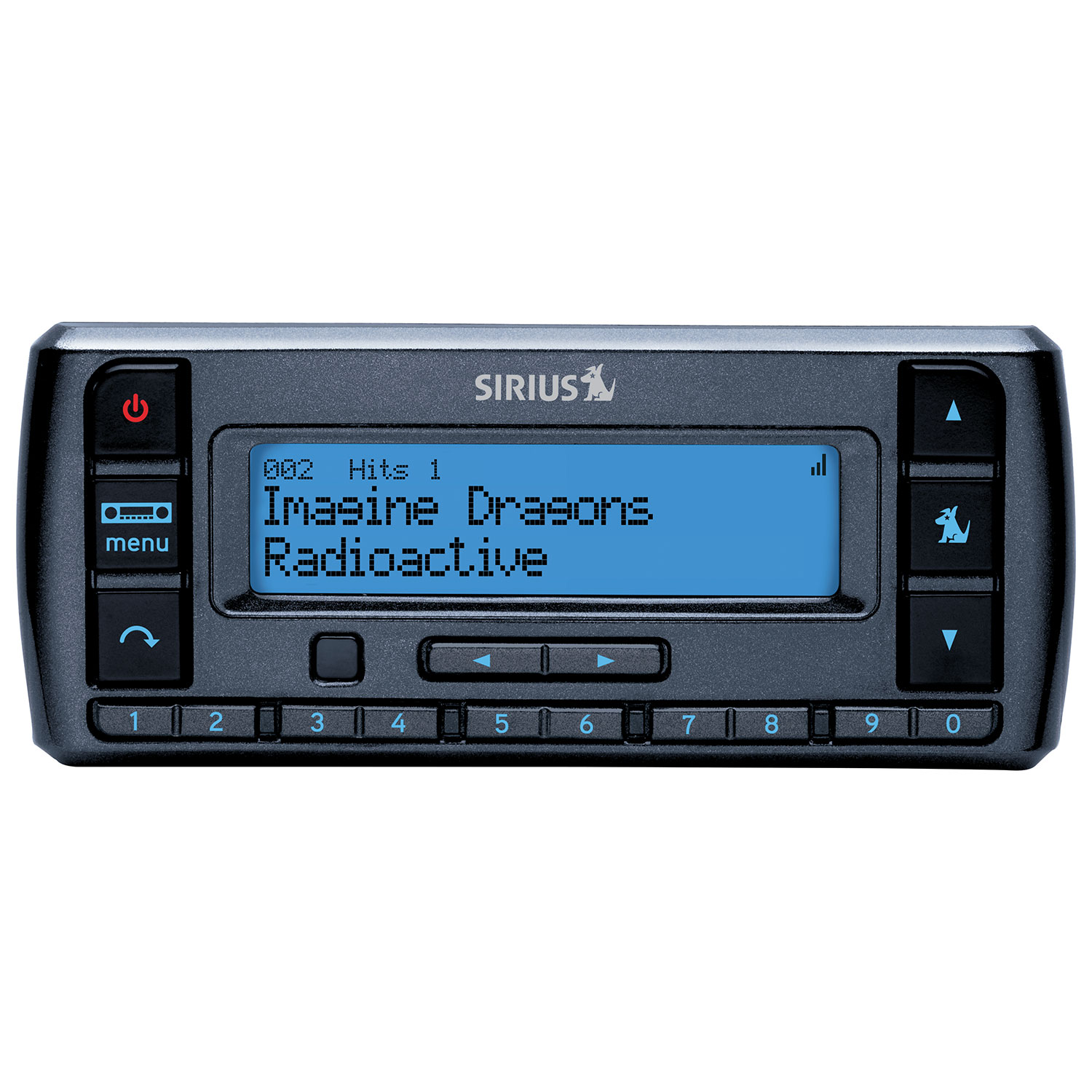
There are other models and other stores. The one above is just one example. Find it on Best Buy's web site here.
Once you have purchased the SiriusXM receiver you will have to subscribe to the service. This is easily done by telephone, for periods of 6 months or longer.
Next you will require a home receiver kit. This can also be purchased from Best Buy, among other stores.

The home antenna kit can be found on Best Buy's web site here.
Once your service is activated, all that you have to do is place the antenna on a window sill and connect it to the home kit base, plug the SiriusXM receiver into the home kit base and plug the base into a wall plug.
Tune your radio to an empty frequency (e.g. one with much static, and no overlap with other radio stations) and tune the SiriusXM transmitter frequency to the same frequency as your radio. You will have access to all of the stations on SiriusXM via your radio.
If you do not get good reception using the indoor antenna that comes with the home kit, then you can purchase an outdoor antenna and mount it to your rooftop or other location outside the house. You can find the outdoor antenna here.

If you want to add more SiriusXM receivers to your home and use the single outdoor antenna, SiriuxXM offers a repeater unit that will broadcast the signal received from the antenna to your various SiriusXM receiver units within your house.
It's out of stock at SiriusXM at the time of writing, but you can also found it on Amazon.ca. Here is the link on SiriusXM site: link.

If you are buying a new car, I highly recommend that you purchase a built-in SiriusXM radio as an option on the new car. You will never have to fiddle with the radio stations again as you drive on long trips!
Saturday, December 12, 2015
CBC Radio will broadcast Euroradio's "Joy to the World" special program on Sunday, Dec. 20 2015
One of the few remaining reasons to listen to CBC Radio 2 is the annual broadcast on Euroradio's "Joy to the World" program in the weeks leading up to Christmas.
Further details to be released by the CBC on December 17.
Remember when you enjoyed listening to CBC Radio 2 every day, all year around, not just one day per year?
Further details to be released by the CBC on December 17.
Remember when you enjoyed listening to CBC Radio 2 every day, all year around, not just one day per year?
Friday, April 24, 2015
Jurgen Gothe, former host of "Disc Drive", dead at the age of 71
Jurgen Gothe was the comfortable, quirky host of CBC’s DiscDrive
ROD MICKLEBURGH
Special to The Globe and Mail
Published Wednesday, Apr. 22 2015, 8:17 PM EDT
Last updated Thursday, Apr. 23 2015, 2:04 PM EDT
There were the cats, the Willis Point Fire Department, much Mozart, and
there was Jurgen Gothe, the comfortable, conversational host of an eclectic mix
of music and often-quirky chat that made him an unlikely national figure and
his show DiscDrive a long-running institution on CBC Stereo (which became Radio
2).
For three hours each weekday afternoon, from “scenic, subterranean
Studio 20” in the depths of CBC’s concrete bunker of a building in Vancouver,
Mr. Gothe’s mellifluous voice would coax commuters home and soothe their
jangled nerves, while charming those at home. He was helped by musical
selections that went well beyond classical to dip into jazz, pop, New Age,
bluegrass and, on occasion, obscure, side-splitting cuts such as Don’t Fence Me
In, rendered by a pair of cowboy-hatted East Germans named Hein & Oss.
But it was really Mr. Gothe who made DiscDrive what it was.
Launched in 1985, at a time when classical music at CBC was serious
business, the preserve of announcers intoning gravely about rondos and sonatas
in E major, DiscDrive was revolutionary. Mr. Gothe chatted convivially about
the music and anything else that popped into his active mind. He seemed
engaged, hip to the world outside, someone you might want to share a glass of
wine with. And Mr. Gothe did know his wine.
His personable, knowledgeable columns on food and particularly wine
were regular features of numerous newspapers and magazines for years. For
someone who projected such an urbane, laid-back persona over the air, Mr. Gothe
had tremendous energy. He ran a corporate communications business, wrote books,
cooked up a storm, pounded out columns, and dabbled in unpublished, trashy
mystery novels. He also penned a Monty Pythonesque, six-part radio series about
the adventures of a fictitious Mozart named Wolfie Amadeus and a cast of characters
hanging out at a pub in Vienna known as The Dog and Trombone. It remains a
much-loved cult classic.
But what rocketed him to cross-country prominence was DiscDrive. With
half a million regular listeners across the country, the program soon had the
highest ratings of any radio show on CBC’s FM network. In Vancouver, DiscDrive
topped most private AM offerings, too. It dominated Canada’s FM airways until
2008, when CBC brass abruptly cancelled the show after 23 years, as part of the
network’s controversial makeover to attract a younger demographic.
Mr. Gothe, who died of cancer on April 9, a few days after turning 71,
was an unlikely choice to front a show on CBC. A high school dropout, he had
spent much of his working life in private radio on the advertising side, where
his talent for writing clear, sometimes funny commercials brought him steady
employment. He had made only sporadic appearances on air, reviewing wines and
cultural events. One of his reviews nearly sparked a riot at Vancouver’s Schnitzel
House, which sponsored the arts roundup. When Mr. Gothe panned the film Battle
of Britain and the bomber jackets worn by a number of RAF veterans who had
attended the movie premiere, the flyboys took offence. They went down to the
Schnitzel House, threatening to dismantle the German restaurant’s furniture,
before peace was eventually reached .
Meanwhile, Mr. Gothe had been acquiring an encyclopaedic knowledge of
recordings, cramming his living space with thousands of albums. He first got
his foot in the door at CBC in 1984, contracted to host Front Row, a
straightforward Sunday afternoon concert series. A year later, CBC producer Tom
Deacon was looking for someone with the gift of intelligent gab to preside over
an innovative new FM show based in Vancouver, aimed at a drive-home audience
with little interest in long symphonies. The aim was to relax FM’s traditional
format and make highbrow music more accessible. Hired after a brief audition,
Mr. Gothe made the show his own. “It needed a certain personality to carry it
off, and Jurgen was the right man for the job from the get-go,” long-time
producer Janet Lea said.
To the consternation of CBC producers in Toronto, Mr. Gothe worked
without a script. He told stories, not all of which were true. He interjected
whimsy on the fly, imagining at one point a Vivaldi Works factory churning out
Vivaldi pieces by assembly line. The credits at the end of the week regularly
included a nod by Mr. Gothe to the Willis Point Fire Department, a volunteer
brigade for the small enclave outside Victoria where he used to live.
And there was his succession of cats. Mr. Gothe talked frequently about
them on air. There was Quincy, after whom he named his consulting company.
There was Fred. When Fred died, Mr. Gothe commissioned a commemorative piece
from Seattle composer Alan Hovhaness, titled Fred the Cat Flies to Heaven. But
most of all, there was Herbie. He became such a part of DiscDrive that its
annual list of best recordings were known as the Herbie Awards. On Herbie’s
death, the final hour of the show was turned over to music the dead cat might
have appreciated.
The abundance of chatty hosts on CBC Radio’s FM network today owes much
to the trailblazing of Mr. Gothe and DiscDrive. Before that, said CBC
personality Shelagh Rogers, “most CBC music shows were good for you, like
All-Bran. With Jurgen, there was fun. Deep fun.” But DiscDrive was not A
Prairie Home Companion. It was still a show of satisfying music, which was not
always to Mr. Gothe’s own liking. Once, after listening to Andrea Bocelli
perform his hit Con te partiro, Mr. Gothe moved in close to the mike and
observed: “Ahh, the wonderful sound of money.”
Mr. Gothe was highly regarded south of the border. Many NPR stations
picked up DiscDrive, and he won the Gold Medal at the New York International
Radio Festival an unprecedented three times as best network radio personality.
Mr. Gothe was born in Berlin on April 4, 1944, or 4-4-44 as he liked to
tell people. The elder of two children born to Charlotte and Walter, a baker
who survived a stint as a medic on the Russian Front, he grew up in a city
devastated by bombing and postwar hardships. But it was there that young Jurgen
first experienced radio, performing as a child actor and singer on a Berlin
kids show on an American-financed station in the divided city. Seeking a better
life, the Gothes moved to Canada in 1954.
They landed in Medicine Hat. Despite the shock of going from urban
Berlin to prairie Alberta, Mr. Gothe made the best of his new surroundings. A
precocious teenager, he acted in community theatre, set up a basement gathering
place called The Ember for the small city’s few young hipsters, and, at 15,
wangled a late night, one-hour gig playing jazz records on “the voice of the
Gas City,” radio station CHAT. “He was Medicine Hat’s avant-garde man,” former
station employee Wayne Craven told the local newspaper. “I didn’t think he’d be
in Medicine Hat very long.”
Indeed, Mr. Gothe was bored and restless by the time he hit Grade 10.
Figuring he could learn far more on his own, he quit school. After working
briefly for the Medicine Hat Brick and Tile Co., he lit out for Manitoba and a
series of odd jobs, including pumping gas. By 18, he was in Vancouver, looking
for radio work. He was soon hired by CHQM, a popular easy listening station
that Time magazine once called “probably the best private radio station in
North America.”
Meanwhile, he was building a record collection of classic proportions
and becoming a sophisticated, self-taught connoisseur of wine and food. He
loved celebrating good wines, while purposefully puncturing the snobbery that
often shrouded the wine world. His final wine column, written last August for
The Georgia Straight, was a typical ratings roundup of decent wines under $20 a
bottle. “Ordinary people don’t taste wine,” he once said. “They drink it.”
Mr. Gothe bounced around several radio stations from Victoria to the
Okanagan before making it big at CBC, but mostly, he was at CHQM, working his
way from ad writer to music librarian to copy chief. There were also tenures at
various ad agencies around town. Mr. Gothe’s talent and creative, offbeat way
of looking at the world never left him short of employment.
At home, Mr. Gothe liked to throw dinner parties, usually doing all the
cooking and washing up himself. An early fan of Monty Python, he invited the
wacky troupe to his house on their first trip to Vancouver for a memorable
all-nighter.
Mr. Gothe had several long-term relationships, including a marriage to
fashion designer Marilyn Janis that ended in divorce, before meeting Victoria
photographer Kate Williams on a blind date. They married a year later, in 1991.
Known for his private reserve, Mr. Gothe was caught off guard by the
long-running public spotlight that came with the success of DiscDrive. Yet he
came to enjoy his interaction with audiences when the show toured across the
country and occasionally south of the border, talking affably to thrilled
listeners between cuts of music.
Throughout most of DiscDrive’s lengthy run, Mr. Gothe would grouse to
close friends that he would do one more year then retire to the Gulf Islands
and write mysteries. But when the end came after 23 years, he was bitter at
being cut loose so close to the show’s 25th anniversary. He agreed to do a
one-hour Sunday afternoon program called Farrago, featuring his favourite CDs.
It lasted but a year. “Nobody’s heart was in it,” Ms. Lea said.
After leaving the CBC, Mr. Gothe kept busy parlaying his extensive
epicurean experiences into teaching, consulting, judging and just plain tasting
of the wine and food he enjoyed so much. Few mourned his passing more than
those in the now celebrated B.C. wine industry. Mr. Gothe had supported and
encouraged the industry from its early days, when tasting many B.C. wines was
considered, in the words of fellow oenophile Anthony Gismondi, “a painful
experience.”
Mr. Gothe was an original throughout his life, said former CHQM
executive Lyndon Grove, who had watched him mature from an 18-year-old hopeful
to the gifted force he became. “He always had this great sense of confidence,”
Mr. Grove said. “He was just there, ready for the world to catch up.”
Mr. Gothe leaves his wife, Kate; stepdaughter, Colette; brother, Peter;
nephew, Jordan; and niece, Kelsey.
Sunday, February 22, 2015
Tom Mulcair on the CBC
Listen to Tom Mulcair's views on reviving the CBC from the Sunday, February 15 2015 edition of "The Sunday Edition":
Tom Mulcair on the CBC
Tom Mulcair on the CBC
Sunday, February 8, 2015
The Liberal Party of Canada's vision for the CBC - Stéphane Dion
From the Sunday February 1st edition of "The Sunday Report" on CBC Radio One:
Listen to the episode here.
Listen to the episode here.
Thursday, January 8, 2015
The latest survey of CBC Radio 2 market share - not so good, eh?
If you have been following the intermittent posts of this
blog then you will know that we analyze the market share of CBC Radio 2
stations from time to time. We use the data provided by “Numeris” (formerly the
Bureau of Broadcast Measurement, or “BBM”) to compare the audience share of CBC
Radio 2 stations to 2007, just before the CBC embarked on their disastrous
attempt to revamp the CBC Radio 2 programming. The BBM survey that measured the
radio audience in various Canadian cities before the CBC made their changes to
CBC Radio 2 was termed S1 2007; i.e. the first survey of 2007.
The rationale for this comparison is we want to perform an
apples-to-apples comparison. How much did the CBC Radio 2 audience increase (or
decrease) after the changes were made? The only way to do that is to compare
the current CBC Radio 2 audience with that that existed in 2007, before the
changes were made.
The latest survey available from Numeris is the survey
spanning the period Sept. 1 2014 – November 30 2014. To be consistent with
previous terminology from Numeris we call this survey S3 2014; i.e. the third
survey for 2014. Note that these surveys use PPM data. “PPM” is an abbreviation
for “Portable People Meter”. Ottawa and Winnipeg are not included in the S3
2014 survey since these cities are still surveyed using Radio Diary data.
So, onto the results. In spite of an increase in the total
radio listening audience in Montreal by 4% since S1 2007, the audience share
for CBC Radio 2 has declined by a whopping 42.1%. Not good.
In Toronto the total radio audience has declined 14.5%. CBC Radio
2 has declined 33.9%. Not good either.
In Vancouver the total radio audience has declined 18.5%.
The audience for CBC Radio 2 has declined 52.9%. Even worse.
In Calgary the total radio audience has declined 16.6%. The
audience for CBC Radio 2 has dropped 49.5%.
In Edmonton the total radio audience has declined 13.3%. The
audience for CBC Radio 2 has fallen 62.0%.
In summary, the total radio market in these cities has
declined by 12.5% since S1 2007. Yet the market share for CBC Radio 2 stations
in these cities has declined by 39.5%, or a total of 280,500 listeners.
280,500 listeners can’t all be wrong.

Wednesday, June 4, 2014
The CBC Survey on the future of the CBC
The CBC is conducting a survey of its viewers and listeners concerning the future of the CBC. You can find the survey here.
I suspect the CBC is paying lip service to the concept of soliciting the opinions of the viewers and listeners. I suspect they've made up their small, feeble little minds about what they intend to do already. But if you want to participate in the survey, go right ahead.
Just to give you some idea of what to expect, here are the survey questions:
Q1: In your opinion, how important is it for Canada to have a national public broadcaster like CBC/Radio-Canada?
The broadcasting landscape has changed significantly over the last decade, with media convergence (merging media companies and merging media technologies), the proliferation of new technologies, the availability of more content choices than ever before, and more ways of having access to content.
Q2: Considering these changes, in your view is it now more important or less important for Canada to have a national public broadcaster in the future?
Conventional television is changing. Across the industry advertising is moving from over-the-air television to specialty channels and digital. Finding a viable, economic model for local television is particularly challenging for all broadcasters.
Q3: Looking towards 2020, what services do you think CBC/Radio-Canada should continue to provide in the regions?
Many Canadians are consuming news online and on mobile devices now, and consumer trends suggest that by 2020, more will consume it that way, rather than via conventional television or radio.
Q4: Looking towards 2020, would you prefer to receive news in the form of traditional long-form newscasts or online short-form content?
Over 70% of music listening in Canada is currently via radio, but there is a downward trend in conventional radio and a move towards consuming music online.
Q5: Looking towards 2020, if you had a choice about how you would consume music, would you prefer online distribution or traditional over-the-air radio?
Children are increasingly consuming television content online.
Q6: Looking towards 2020, do you think that our children’s programming should remain on conventional television or be available online only?
Some consumers enjoy watching television that is delivered over the Internet (called Over-the-Top Television, or OTT). Two examples of this are Netflix and ICI Tou.tv. This “television” content can be viewed on a computer, smartphone, tablet, or an Internet-connected television set.
Q7: In 2020, how would you like to receive your television content?
Of 18 Western countries, Canada is the third-lowest in terms of per-capita public funding for their public broadcaster. Currently, Canadians pay just $29 for our combined services annually, while the average for the 18 countries is $82.
Q8: As a taxpayer, would you be willing to pay
It's commendable that the CBC is soliciting the opinions of viewers and listeners, but this initiative has come far, far too late. In 2007 the CBC constantly referred to the infamous "arts and culture" survey in justifying the decision to revamp the CBC Radio 2 programming, yet refused to release the results of the survey, holding on to it with a Kremlin-like grip that should have astonished members of the public. In the face of public opposition to these programming changes the CBC persisted in driving ahead with bull-dog like obstinacy, only to watch CBC Radio 2 listenership decline. So, having already destroyed CBC Radio 2, is it any wonder that we, the viewers and listeners of CBC radio and television, should have no confidence in the ability of CBC management to steer the CBC ship through choppy waters of future changes in the broadcasting ocean?
Note the use of leading descriptions prior to the actual question of the survey. Such as:
Of 18 Western countries, Canada is the third-lowest in terms of per-capita public funding for their public broadcaster. Currently, Canadians pay just $29 for our combined services annually, while the average for the 18 countries is $82.
After reading this little blurb, of course people are going to choose "More than $29 a year?"! Who wants to be a piker in the world of international broadcasting? But, the survey is what it is. Have fun!
I suspect the CBC is paying lip service to the concept of soliciting the opinions of the viewers and listeners. I suspect they've made up their small, feeble little minds about what they intend to do already. But if you want to participate in the survey, go right ahead.
Just to give you some idea of what to expect, here are the survey questions:
Q1: In your opinion, how important is it for Canada to have a national public broadcaster like CBC/Radio-Canada?
- Very important
- Important
- Somewhat important
- Not important at all
The broadcasting landscape has changed significantly over the last decade, with media convergence (merging media companies and merging media technologies), the proliferation of new technologies, the availability of more content choices than ever before, and more ways of having access to content.
Q2: Considering these changes, in your view is it now more important or less important for Canada to have a national public broadcaster in the future?
- Much more important
- Somewhat more important
- No more or less important
- Somewhat less important
- Much less important
Conventional television is changing. Across the industry advertising is moving from over-the-air television to specialty channels and digital. Finding a viable, economic model for local television is particularly challenging for all broadcasters.
Q3: Looking towards 2020, what services do you think CBC/Radio-Canada should continue to provide in the regions?
- CBC/Radio-Canada should continue to provide local television, online and radio services in the regions.
- CBC/Radio-Canada should drop its local television service in some regions, but continue local radio and online coverage.
- CBC/Radio-Canada should provide the services which are most appropriate to a region, whether they be online, radio, television, or a combination of all or some.
Many Canadians are consuming news online and on mobile devices now, and consumer trends suggest that by 2020, more will consume it that way, rather than via conventional television or radio.
Q4: Looking towards 2020, would you prefer to receive news in the form of traditional long-form newscasts or online short-form content?
- Traditional newscasts on conventional media.
- Online short-form content.
Over 70% of music listening in Canada is currently via radio, but there is a downward trend in conventional radio and a move towards consuming music online.
Q5: Looking towards 2020, if you had a choice about how you would consume music, would you prefer online distribution or traditional over-the-air radio?
- Online music.
- Music via radio.
Children are increasingly consuming television content online.
Q6: Looking towards 2020, do you think that our children’s programming should remain on conventional television or be available online only?
- Keep it on the conventional television service.
- Move all children’s programming online.
Some consumers enjoy watching television that is delivered over the Internet (called Over-the-Top Television, or OTT). Two examples of this are Netflix and ICI Tou.tv. This “television” content can be viewed on a computer, smartphone, tablet, or an Internet-connected television set.
Q7: In 2020, how would you like to receive your television content?
- Online through services like Netflix or ICI Tou.tv.
- On conventional television channels as we have now.
Of 18 Western countries, Canada is the third-lowest in terms of per-capita public funding for their public broadcaster. Currently, Canadians pay just $29 for our combined services annually, while the average for the 18 countries is $82.
Q8: As a taxpayer, would you be willing to pay
- More than $29 a year?
- Less than $29 a year?
- The same amount: $29 a year?
The final question was a request for "any other comments". Here is the comment that I submitted:
It's commendable that the CBC is soliciting the opinions of viewers and listeners, but this initiative has come far, far too late. In 2007 the CBC constantly referred to the infamous "arts and culture" survey in justifying the decision to revamp the CBC Radio 2 programming, yet refused to release the results of the survey, holding on to it with a Kremlin-like grip that should have astonished members of the public. In the face of public opposition to these programming changes the CBC persisted in driving ahead with bull-dog like obstinacy, only to watch CBC Radio 2 listenership decline. So, having already destroyed CBC Radio 2, is it any wonder that we, the viewers and listeners of CBC radio and television, should have no confidence in the ability of CBC management to steer the CBC ship through choppy waters of future changes in the broadcasting ocean?
Note the use of leading descriptions prior to the actual question of the survey. Such as:
Of 18 Western countries, Canada is the third-lowest in terms of per-capita public funding for their public broadcaster. Currently, Canadians pay just $29 for our combined services annually, while the average for the 18 countries is $82.
After reading this little blurb, of course people are going to choose "More than $29 a year?"! Who wants to be a piker in the world of international broadcasting? But, the survey is what it is. Have fun!
Monday, April 21, 2014
Globe and Mail article on the CBC by Konrad Yakabuski April 21 2014
From The Globe and Mail, Monday April 21 2014 :
No, the CBC’s not cool. Nor should it be
Ephemeral is the opposite of what the CBC needs. It needs
stable funding, of course. But it also needs managers committed to public
broadcasting, rather than imitating entertainment networks in the hopes of
landing a better job at one of them. Frankly, it needs to gets serious.
No, the CBC’s not cool. Nor should it be
KONRAD YAKABUSKI
The Globe and Mail
Published Monday, Apr. 21 2014, 6:00 AM EDT
“Well, here we are again,” a wistful CBC president Hubert
Lacroix began as he outlined the latest round of cuts – $130-million and 657
jobs in all – to afflict the national public broadcaster. And off we’ve gone
again into another round of CBC-bashing and rehashing the network’s many
failings.
It must be alternately infuriating and demoralizing to work
for the CBC. The English-language television broadcaster gets zero public
praise. Everyone’s a critic and the private media seem out to delegitimize your
very existence. But that’s what you sign up for when you take a job at an
institution Canadians not only own, but delight in “reimagining.”
It would all be easier if the broadcaster’s leaders, past
and present, weren’t still stuck in some alternate reality, deluded by visions
of grandeur and budget envy. They think that, if only Canadians funded their
public network the way the British and French fund theirs, the CBC could be all
things to all people and ne’er a disparaging word would be heard. In other
words, it’s not their fault; it’s ours.
“The CBC, despite the fact that it faces arguably the
largest cultural challenge, is the worst financed public broadcaster,” the
network’s former head of English services, Richard Stursberg, told a Senate
committee this month. “I don’t see any reason why a CBC that is properly
focused and properly funded can’t compete.”
The first problem with this idea is that it completely
ignores the circumstances in which overseas public broadcasters operate. The
British Broadcasting Corp. and France Télévisions are empires under siege, but
they are still empires. They have built up powerful political constituencies
and set up countless sister networks, on multiple platforms, precisely to keep
private competitors out of their space. They face nowhere near the same direct
threat from American fare as the English CBC does, and have been able to shape
and satisfy public expectations as a result.
The second problem with Mr. Stursberg’s analysis is that it
assumes the CBC’s mission is to “compete.” He is hardly alone in thinking that
the CBC must chase ratings. That mindset prevails all the way up the food
chain. “It is declining viewership that is causing their challenges,” a
spokeswoman for Heritage Minister Shelley Glover told Sun News. “It is up to
the CBC to provide programming that Canadians actually want to watch.”
With Ottawa sending that message, it’s little wonder
programmers fear that the failure to boost ratings will only give politicians
further ammunition to cut their funding. So, next season, Canadians will be
treated to Schitt’s Creek and Strange Empire as a CBC desperate to create any
buzz it can risks taxpayer money on an “edgier” lineup designed to attract a
younger demographic.
Hopeless. It’s not the occasional popular “hit” that is
going to make the CBC viable and necessary. It does not have the means or the
talent pool to deliver consistently high-quality dramas or comedies that can
lure English Canadians back from their constantly improving American
favourites.
The CBC claims a share of English TV ratings of about 8 per
cent. Without pro hockey, which it will soon lose, the share may be half that.
Its comparative advantages lie elsewhere, in public affairs programming that
actually reflects the country we live in, not some programmer’s fantasy world.
Thankfully, someone at the CBC gets it.
The same day Mr. Lacroix announced his cuts, the CBC
broadcast, in prime time, an in-house documentary that purported to solve the
mystery of the Bell of Batoche, a 130-year-old symbol of Métis pride. It
encapsulated the history of the North-West Rebellion, Louis Riel and the very
reason 19,000 francophones still live in Saskatchewan. These are stories we
should all know to appreciate the country we have become. It’s an illustration
of the CBC actually fulfilling its mandate, for a change.
It may not be as “cool” as some self-anointed fixers would
like. But I shudder at the thought of what a CBC that tries to be any cooler
than George Stroumboulopoulos would look like. The ultimate arbiters of cool
will never be impressed because cool, by definition, is ephemeral.
Friday, January 17, 2014
Friday afternoon, once again ... and "Canada Live" is still being inflicted upon unwary Canadians
It still remains a mystery to me why the good folks at CBC would think we want to hear mediocre, whining performers on CBC Radio One at 2:00 PM on Friday afternoon. If we wanted to hear mediocre, whining performers then we would tune in to CBC Radio Two, wouldn't we?
It is now 2:42 PM on Friday, January 17 as I write this. And I wish something worth listening to was on CBC Radio One.
It is now 2:42 PM on Friday, January 17 as I write this. And I wish something worth listening to was on CBC Radio One.
Subscribe to:
Posts (Atom)